



Mention platform to most writers and their faces screw up like they just swallowed a bug. (And I am one of them!) And yet, it’s a topic I want to address, in hopes of making it less onerous. Recently, I spoke with Darien Gee on Substack Live about the subject, but I wanted to add and re-emphasis some things I said during that conversation.
Do you need a platform for non-fiction? Yes, unfortunately, but the answer isn’t as cut-and dry as with fiction. Regular readers know that I study book deals and the authors who get them, and about half of those debut novelists don’t have platforms. At most, they have a handful of Instagram followers or a couple of published stories in obscure journals. The majority don’t have a web site yet.
And, in most cases, that’s perfectly fine!
What about those horror stories of editors turning down authors because of small platforms? In certain genres that might be true. If you’re writing dark romance and your peers practically own BookTok, your 500 followers will seem as insignificant as fleas on a basset hound.
Also, lack of platform might be one of those hard-to-argue-with excuses editors give to turn down a submission. In truth, authors without platforms still get book deals. It’s possible that could change, but it’s the current reality.
But that doesn’t mean you’re off the hook. Every week I feature debut releases, and I include links to bonus material on these newly minted authors. Many times, they still have a limited presence. What’s more, their Amazon rankings reveal the folly of the “if I build it, they will come” strategy.
Caro Claire Burke, author of the blockbuster tradwife novel Yesteryear, started a cultural and political podcast called “Diabolical Lies” as soon as she got her book deal, and it was a success by the time her novel was released. (The name comes from a speech by Kansas City Chiefs kicker Harrison Butker, who claimed that women have been told “diabolical lies” regarding feminism and career ambition, and they should embrace traditional roles.)
When an author is pro-active about connecting with potential readers, the publisher often matches their efforts. Likewise, apathy is often met with apathy.
That’s the bad news but the good news is platform building isn’t as awful or daunting as it sounds, particularly if you just do a little every day. So, here’s my best and laziest advice.
Reframe the task
Don’t call it platform building, call it connecting with cool, like-minded people. Your books have a point-of-view, and there are readers who crave what you have to say and your platform is about finding those folks.
Author Margaret Lashley comes to mind. She writes funny, Florida-set mysteries and says they’re “stories that take you off the beaten path.” Her covers are colorful and fun, her Facebook page is always hilarious, and her titles match her sensibilities. (The Devil Wears Stretch Pants is a favorite of mine.) Everything about her author persona says, “Hey, my books are fun, Southern and quirky, and I’m seeking readers who appreciate that experience in a book. (Of which there are many; she sells novels by the boatload.)
Matt Dinniman, who released Parade of Horribles this past week and has recently been dominating bestseller lists, has found his people. The bestselling author’s interests include horror, high fantasy, and video games. He started posting material on Royal Road,a LitRPG site and attracting readers who loved those things too. (LitRPG or literary roleplaying game is when characters face similar challenges to those found in a video game.).
It’s not all about social media. Grassroots platforms work too.
A woman in my writers’ group, Helen Bradley, is an expert at grassroots marketing which she discusses in this podcast. It’s made her one of the most famous authors in Savannah, and her book is everywhere.
One never knows where that kind of reach will lead. Septuagenarian Allen Levi wrote a sweet episodic novel and self-published it with a simple cover. Nobody would have predicted its runaway success, least of all its unassuming author, and yet, Theo of Golden sold 175,000 copies before it was acquired by Simon and Schuster. Since then it’s sold 300,000 more with no sign of slowing down.
According to the Washington Post, Levi’s niece made a list of all of her uncle’s contacts, asking them to spread the word. (Lazy as I am, I definitely approve of this kind of outsourcing!) She also posted to Facebook groups, in hopes of reaching book clubs. If Levi could drive there, he would meet with them. Three-thousand copies were sold this way but then word-of-mouth took over.
Action reveals path
When I first started out on Substack, I wrote a creativity-themed newsletter, and I had about ten loyal readers. Around the same time, I had a novel die on sub and my FB group of authors on sub was filled with depressing posts. I got curious about the new challenges in publishing, and this Substack was born.
It’s evolved over the months in ways I couldn’t possibly game. And so it is with your platform. Start doing something, anything, and see where it leads you. Don’t worry about missteps. A clear direction will eventually revealed itself.
I wish it weren’t true but a mailing list is important
I’ve been an author for 20 plus years, and I’m so lazy I only recently started a newsletter. I was resistant for a long time, but then a writer friend featured my book in her newsletter, and I sold over fifty books from that single mention. (Thanks, Pam!)
That woke me up, and I created one. Newsletters can make your pre-orders soar and help you get on a bestseller list.
But here’s the catch: You need to consistently grow it. Indie authors are on top of that task. They use swaps and subscriber surges, tout the newsletter in backmatter of their books, and almost always offer an incentive to subscribe.
I’m way too lazy for all of that, but since I have the rights to my backlist, I give away a free novel as an incentive and use Bookfunnel for the sign-up. (I boost a FB post for two dollars a day to grow it.)
(Here’s what the sign-up looks like and p.s., if you want that book, help yourself. I turned off the email requirement just for you.)
By the way, you don’t have to give away an entire book; it can be material related to your novel. Here’s some ideas for incentives. Leigh Stein just dropped a post on prompts for newsletters.
I’m still feeling my way in my author newsletter and it shows, but I’ll get there. An author newsletter I admire and look forward to is Mindy Friddle’s. Also, Jane Friedman has a useful guide to newsletters.
Be active on at least one social media site but not more than two or you’ll burn out.
I like a social media account I can run ads from, and Facebook serves that purpose for me. I’ve had an author page there for over 10 years. I know those women who follow my page pretty well, and have a good idea of which posts will get the most engagement. (P.S. Facebook isn’t dead; if you want to reach the second biggest book buying demographic, women over 50, they are still there dutifully posting recipes and funny cat pics.)
I was on Tiktok but found it far too rigorous to continually create videos. (But it was fun.) I’m also here on Substack and sometimes lurk on Threads. But here’s what matters: show up consistently (not just when you have a book out), respond to comments, and be part of the conversation. But it doesn’t have to feel like work. I think of my Facebook page as my morning water cooler. We talk about the weather, our pets, what books we’re reading, etc.
Don’t discount literary citizenship
Over the years, I’ve tried to be a good literary citizen. I’ve headed group blog tours, organized literary festivals, written book columns, and judged contests. This was obviously when I was younger and had far more energy. Now I have this newsletter, which is all about educating, empowering, and promoting authors. Yes, I get paid for it but for two years, it was completely free. It might seem like a lot of work, but it’s also fun so it doesn’t feel like it.
People always say, “Don’t court writers; court readers,” and there’s truth to that. They might not buy your books, but will help you with the hustle.
Your literary coummunity might blurb you, mention your novel on their socials or maybe even interview you.
Write supporting articles (or better yet re-purpose some) and/or appear on podcasts
While the reach of some web sites and podcasts might be small, you do enough of them and it feels like you’re everywhere, and people love a bandwagon. While promoting her memoir, Fame Sick, Lena Dunham was very visible on Substack and she discusses that strategy here, and yes she has major name recognition, but we all benefit from getting ourselves out there.
But, let me reiterate, you can’t do this overnight. I love Dan Blank’s easy going approach to marketing and in his last newsletter he mentioned the important of small incremental growth. So many of us miss out on this because we feel we need the grand master plan with spread sheets, power points, and an extensive knowledge of SEO. I’m guilty of this. I read three ebooks on starting a mailing list, took copious notes, and I still dragged my feet.
So, what will do today to help grow your platform? (If you’re lazy like me, reading this article counts but you’ll have to come up with something else tomorrow. 😉
Questions? Thoughts? Bitter complaints? Snarky asides? I welcome them all.
PITCH DOCTOR 🩺👩🏻⚕️
The pitch: In 2022, an ambitious Russian tennis star faces a professional and personal crisis. While becoming a high-profile opponent of the war that is shattering the lives of his Ukrainian friends, he learns that twenty-two years earlier his elusive mother bore a son she entrusted to her Ukrainian lover. Fearing his brother may be caught up in the war, he puts his sporting ambitions on hold to embark on a quest that will test him to the limit. Can he find his lost brother, reunite and heal his fractured family, and still achieve his dream of Grand Slam glory?
My thoughts: Good job. This is easy to follow and has all the right elements. It’s just needs to be distilled into one sentence
In 2022, an ambitious Russian tennis player and opponent of the Ukraine war learns of the existence of a long-lost brother (inciting incident) who is caught up in the conflict and vows to find his sibling, (desire) a quest that could cost him his ambitions as well as his life. (obstacles and stakes)
NON-DEBUT RELEASES
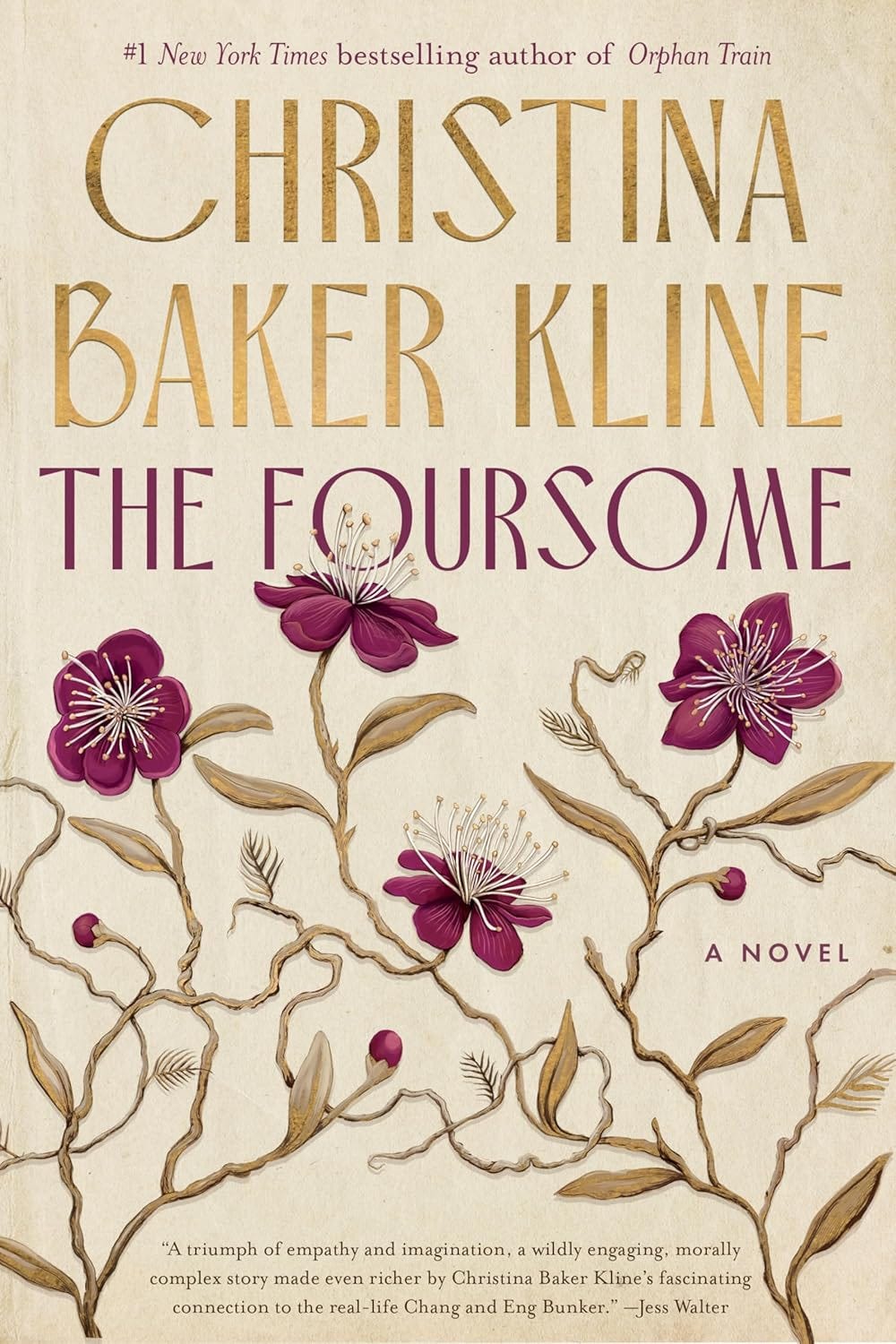
Can you imagine storming past the receptionist at a major publisher and demanding to see your ghosting editor? Christina Baker Kline who has a new novel out this week did just that. In an interview with MFA Lore, she tells the story of confronting her editor, wanting to know why her second novel didn’t do well.
The editor was candid with her, offering three pieces of valuable advice that, in part, helped her write the surprise bestseller Orphan Train. (So worth a listen.) Her latest novel, The Foursome, reimagines the true story of two sisters in nineteenth-century North Carolina who married world-famous conjoined twins from Siam.
How many novels would you write before you gave up? Lynn Painter has a new novel called First and Forever, and her first novel, a YA called Better Than the Movies was a NY Times bestseller, which makes her seem like an overnight success. But what most people don’t know is she wrote fifteen unsold novels before her debut. She’s also managed to find readers in the adult and YA space with lots of crossover. In this engaging interview, she talks about how she manages her social media.
Veronica Roth, of Divergence fame, recently shared her best writing advice to celebrate the release of Seek the Traitor’s Son
Other notable releases: Matt Dinniman’s Parade of Horribles, Dani Francis’s Broken Dove, Louise Penny teaming up with award-winning journalist Mellissa Fun for The Last Mandarin and Jack Carr’s The Fourth Option.
This Week’s Best Package
(Where the cover, title, blurb and premise come together to let readers know exactly what they’re getting.)
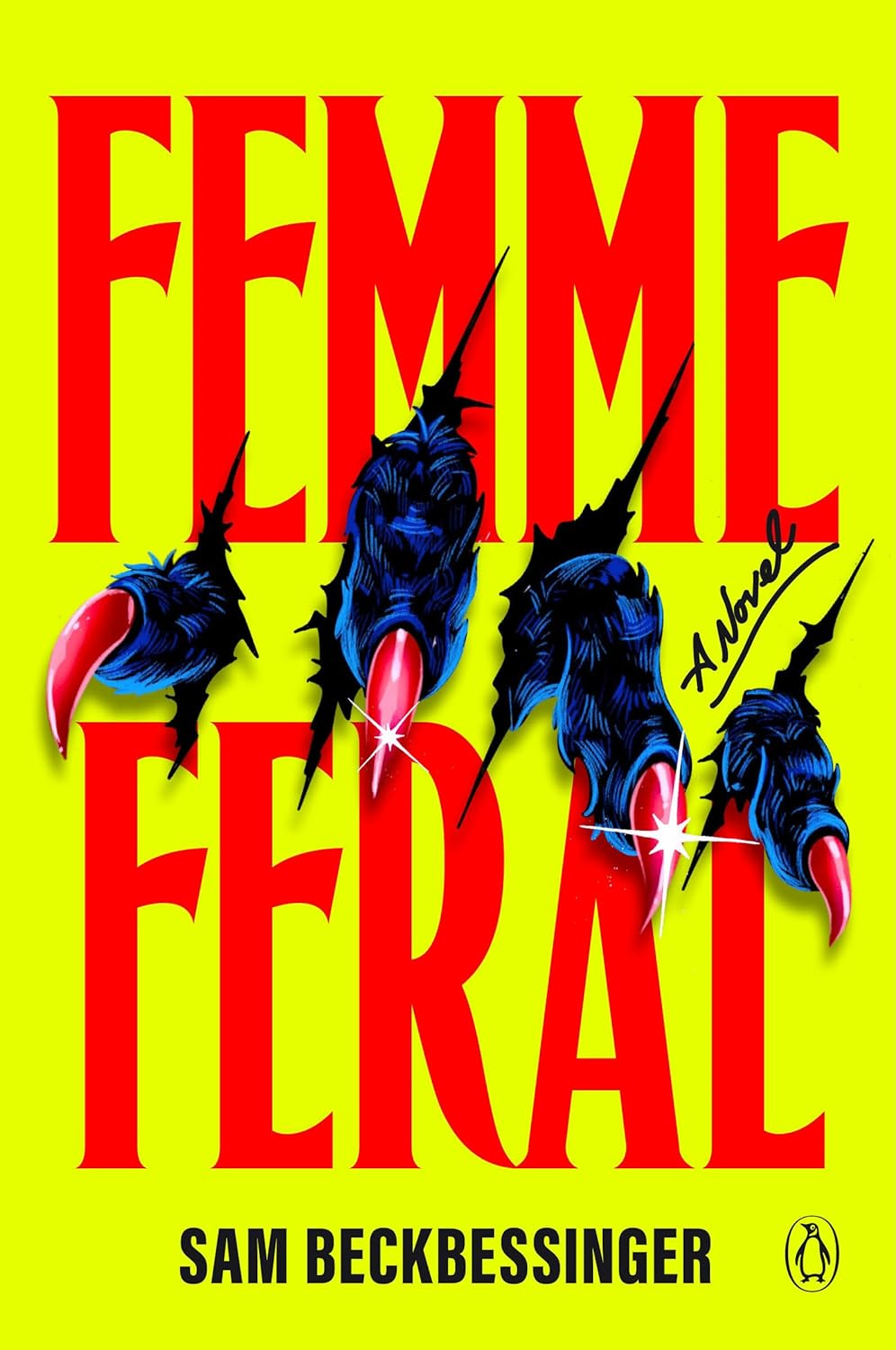
Femme Feral by Sam Beckbessinger (LOVE the title!)
Premise: Hyper-competent Ellie thinks she’s going through perimenopause, but discovers she’s actually turning into a werewolf. (I feel seen.)
Blurb: “Miranda July meets Stephen King.” --Lauren Beukes, New York Times bestselling author of The Shining Girls.
It’s All About the Slither
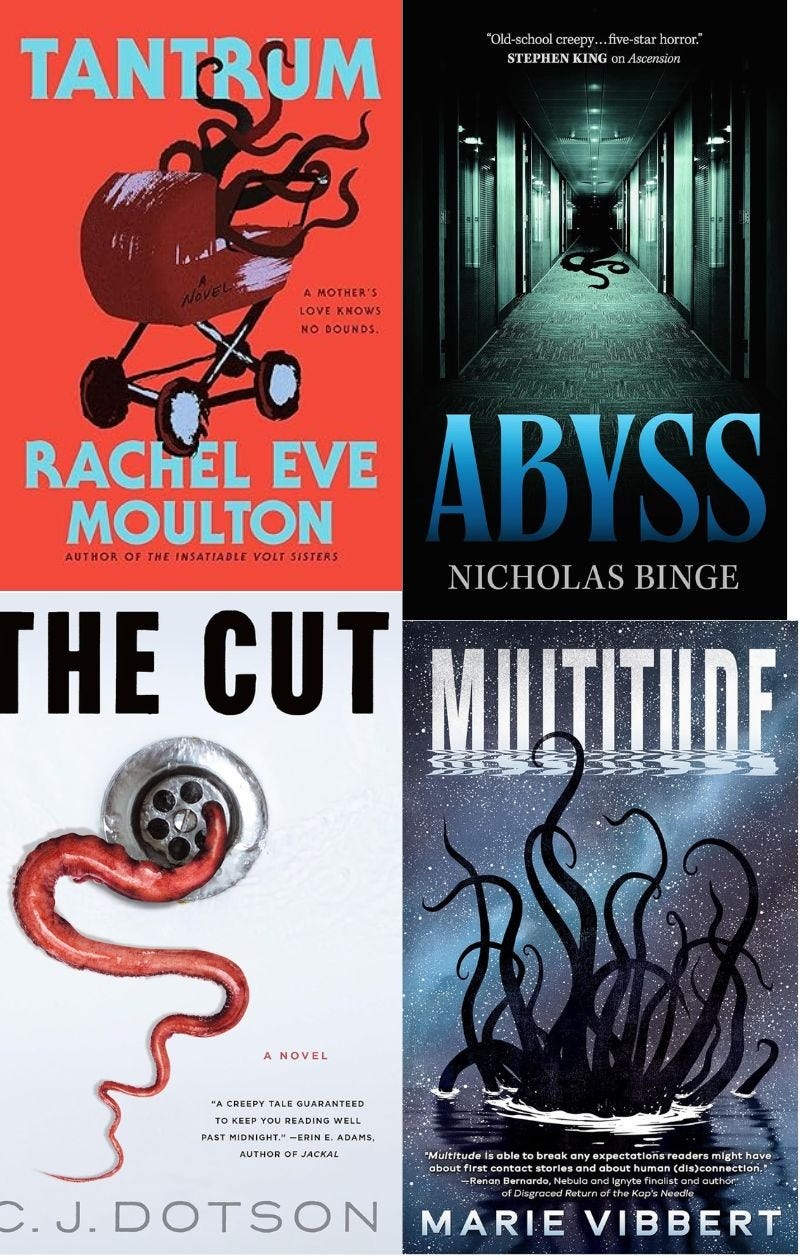
Abyss and Multitude are two releases keeping up with the tentacle trend.
DEBUT RELEASES
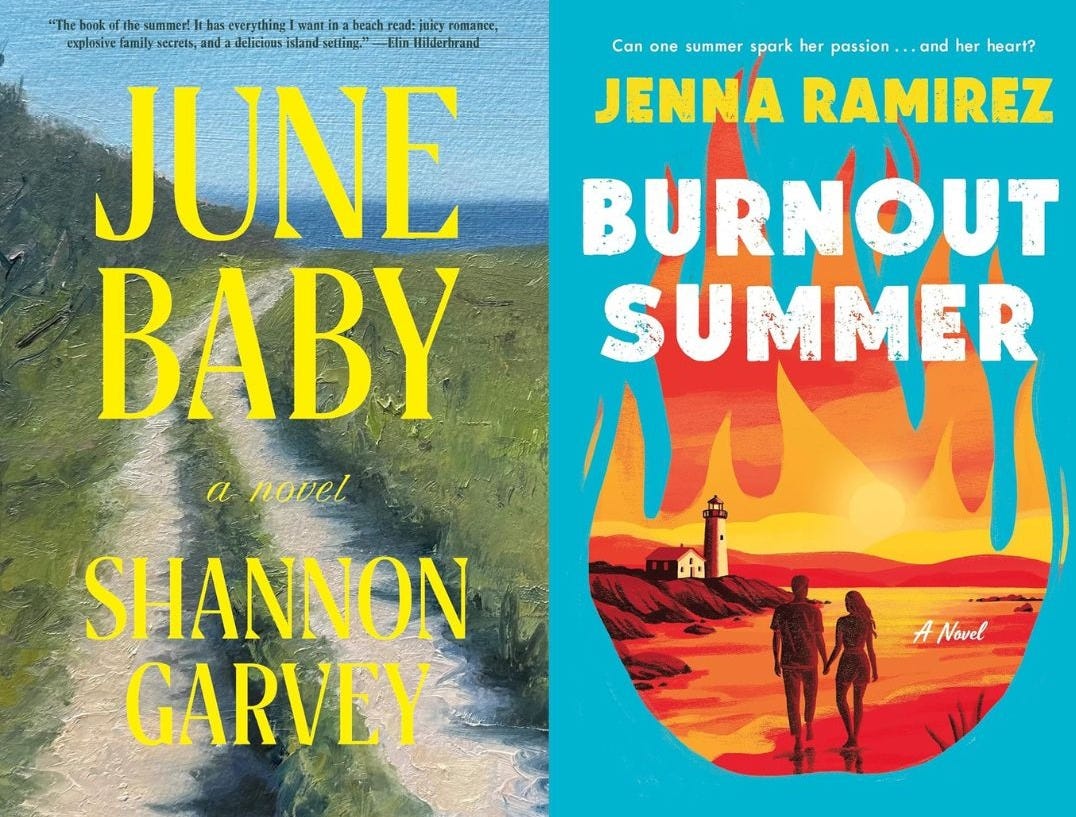
Beach Settings
June Baby by Shannon Garvey
Pitch: Pitched as Sally Rooney meets Elin Hilderbrand, following a woman in her late 20s over the course of one transformative summer on Block Island where she grapples with grief, her choices, and love; exploring what it means to be a mother, a daughter, a lover, and a friend.
First line: The early June wind was warm and humid.
BONUS: The author discusses her inspiration behind the novel.
Editor: Clio Seraphim, Agent: Stephanie Cabot
Burnout Summer by Jenna Ramirez
Pitch: In which a debt-ridden 25-year-old juggling a failed corporate career and a post-breakup rift among her college friends escapes to a Rhode Island beach town to stay with the loveable slacker of the group, only for his carefree attitude to reignite forgotten dreams and stir up new, forbidden feelings, forcing her to question everything about post-grad life.
First line: In the three hours and forty-six minutes Camille Luna sat in jail, she catalogued plenty of similarities to the corporate road.
BONUS: The author offers writing advice in her FAQ and shares her long road to a book
Editor: Eileen Rothschild; Agent: Jessica Spitz
Historical Mysteries
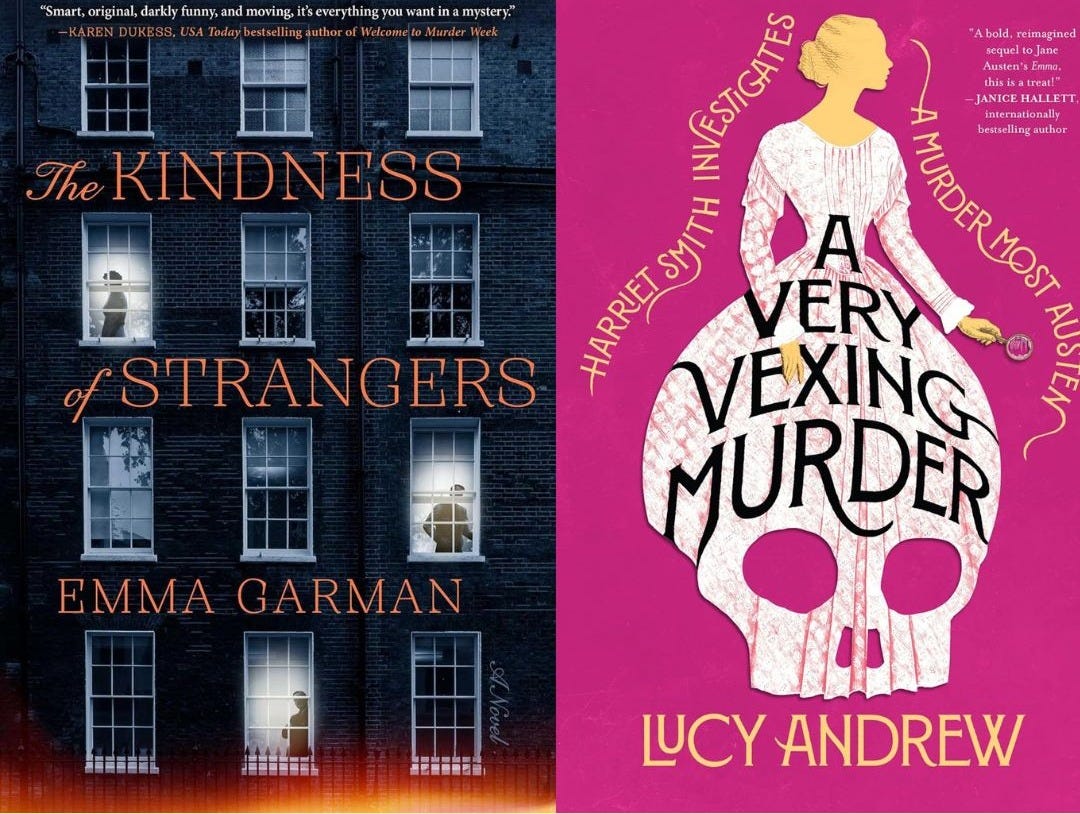
The Kindness of Strangers by Emma Garmen (Sold in a six-figure deal)
Pitch: An homage to the classic murder mystery, set in a rooming house in post-WWII London—a tale of perilous self-invention, complicated love, righteous revenge, and a murder that will implicate everyone.
First line: Jimmy was cold, paralyzing cold and sticky wet above the waist.
BONUS: The author discusses her path to publication and her inspiration.
Editor: Jade Hui, Agent: Cara Lee Simpson
A Very Vexing Murder by Lucy Andrew (Significant deal)
Pitch: Reimagines Harriet Smith, the gullible sidekick of Jane Austen’s Emma, as a spitfire con woman, hired to break off an engagement and uncover a murderer in the genteel village of Highbury.
First line: “Miss Harriet Smith?”
BONUS: The author answers five questions about writing.
Imprint: William Morrow
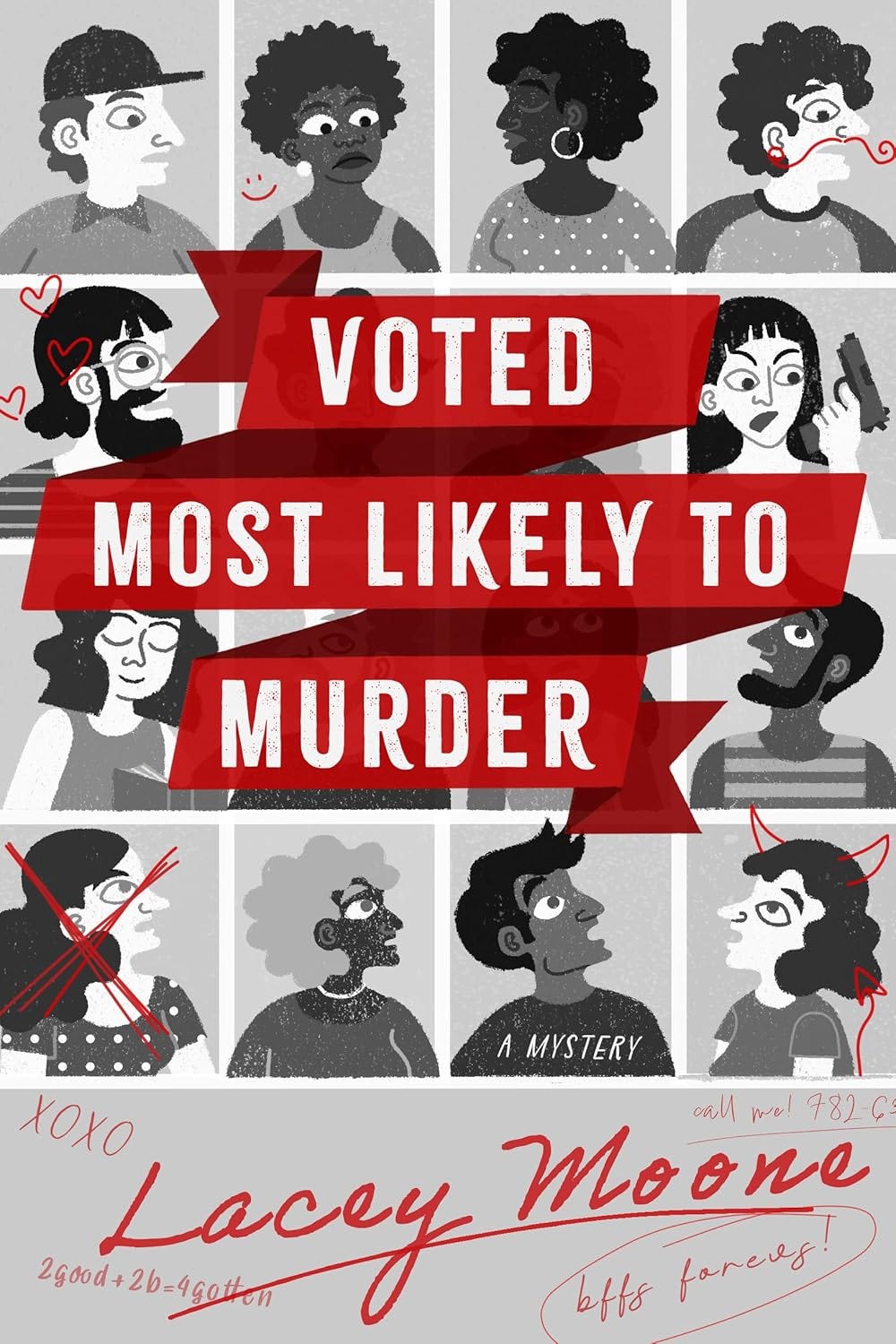
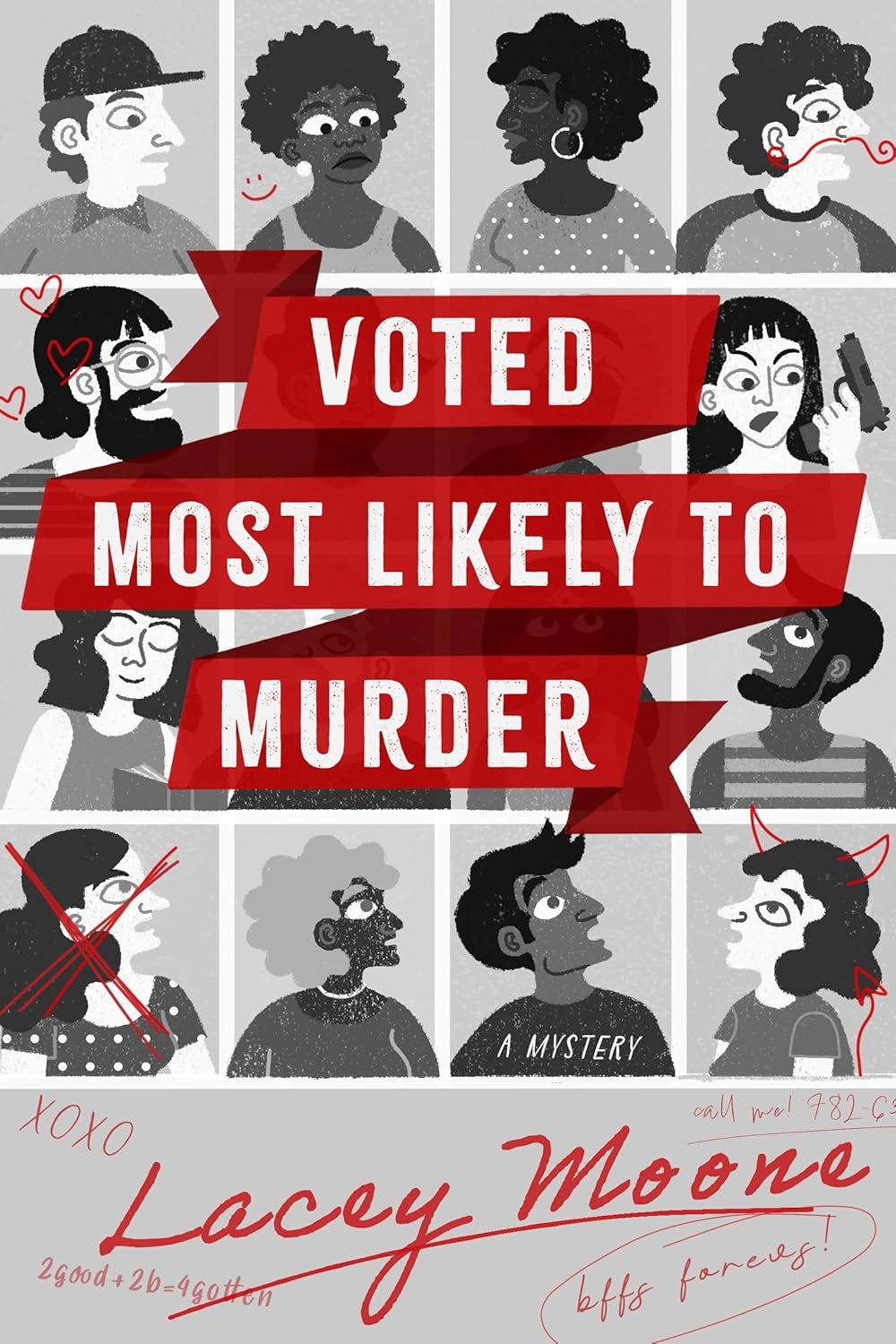
Most Likely to Murder by Lacey Moone
Pitch: In which an unemployed journalist stumbles across the dead body of the philandering class jock at her high school reunion, and when her childhood BFF turned high school nemesis is the prime suspect, they work together to catch the real murderer before things in their sleepy coastal town get even uglier.
First line: High school reunions should be outlawed.
Bonus: The author shares her five favorite sleuths.
Editor: Tara Gavin, Agent: Cindy Bullard
Reality TV
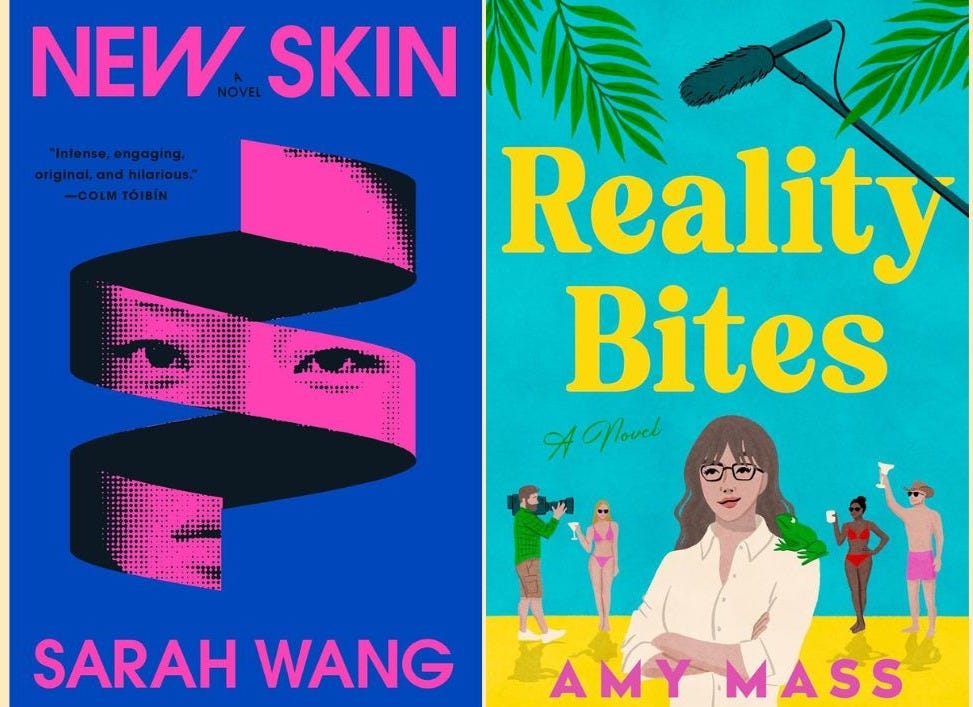
New Skin by Sarah Wang
Pitch: Set in a sinister beauty-obsessed Los Angeles, where an unhinged mother goes on a reality TV competition for botched plastic surgery addicts as her daughter—a rising star in the world of hair transplantation for men—secretly plans to escape to grad school, pitched as for readers of R.F. Kuang and Mona Awad.
First line: The unveiling was to occur on Monday morning.
BONUS: Author interview on Electric Literature
Editor: Liese Mayer, Agent: Jim Rutman
Reality Bites by Amy Mass
Pitch: In which a no-nonsense scientist devoted to saving endangered species is thrust onto a reality dating show—thanks to her influencer mother—only to realize the prize money might be her lab’s last hope, but as she navigates absurd challenges, unexpected friendships, and a secret romance with someone behind the scenes, she finds herself risking far more than she ever expected.
First line: “Is it too conceited to say we’re the greatest scientific minds of the twenty-first century?” Alec asks as he sifts through our findings spread out on the conference table.
Editor: Sophia Kaufman, Agent: Samantha Fabien
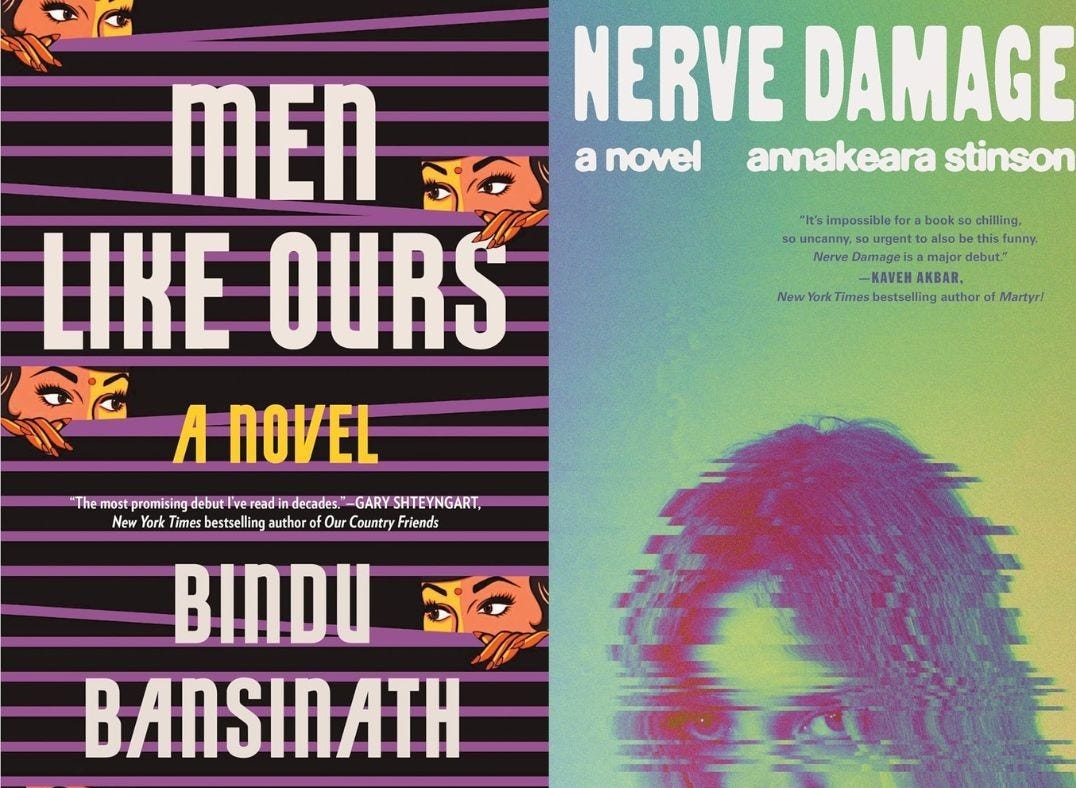
Troublesome Men
Men Like Ours by Bindu Bansinath
Pitch: narrated by a powerful chorus, about a central Jersey suburb of South Asian immigrant women that is shaken following the death of a mysterious community members.
First line: Men like ours are diabetics.
BONUS: The author writes for The Cut and has some amazing clips.
Editor: Amber Oliver, Agent: Jim Auh
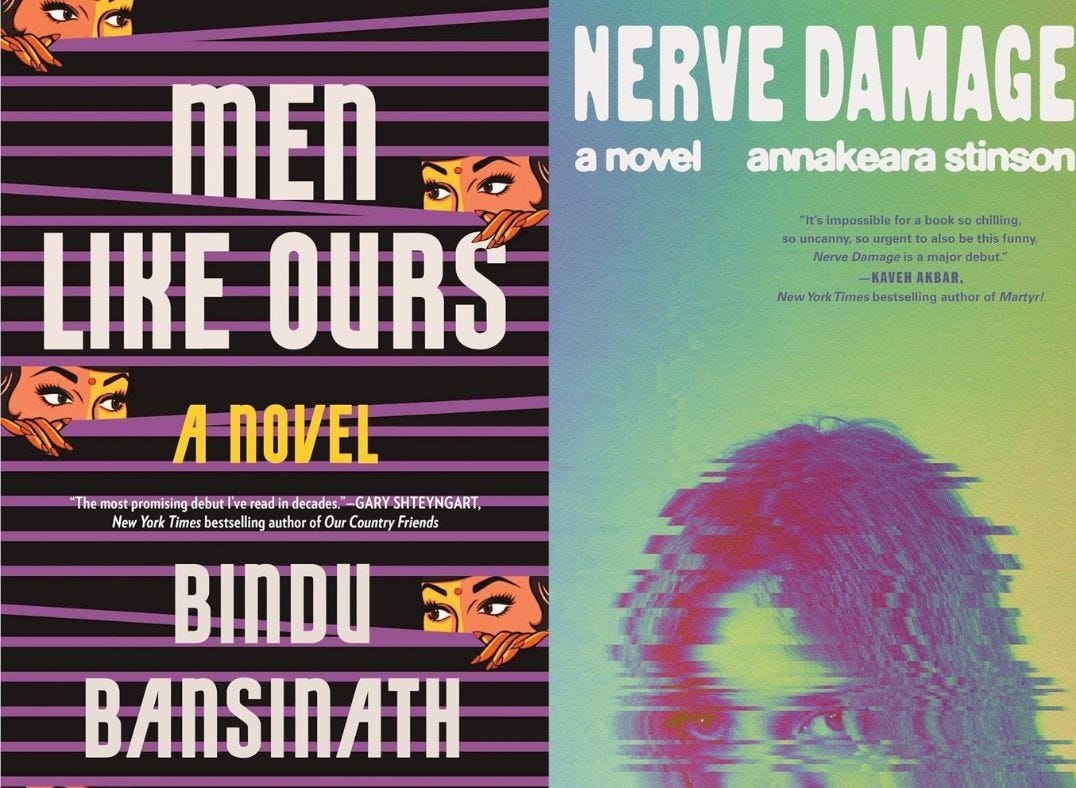
Nerve Damage by Annakeara Stinson
Pitch: in which a young woman fears her abusive ex-boyfriend has followed her from New York to L.A., and embarks on a deeply paranoid quest to discover the truth, ultimately stalking her own stalker
First line: It’s the day before after Halloween and I’ve agreed to go to a concert at a venue called Afterlife with Bunny and this insufferable guy she’s been dating.
BONUS: The author talks about her writing practice and some of her anxieties about publishing.
Editor: Maris Dyer, Agent: Eloy Bleifuss
Wildly Original Premises
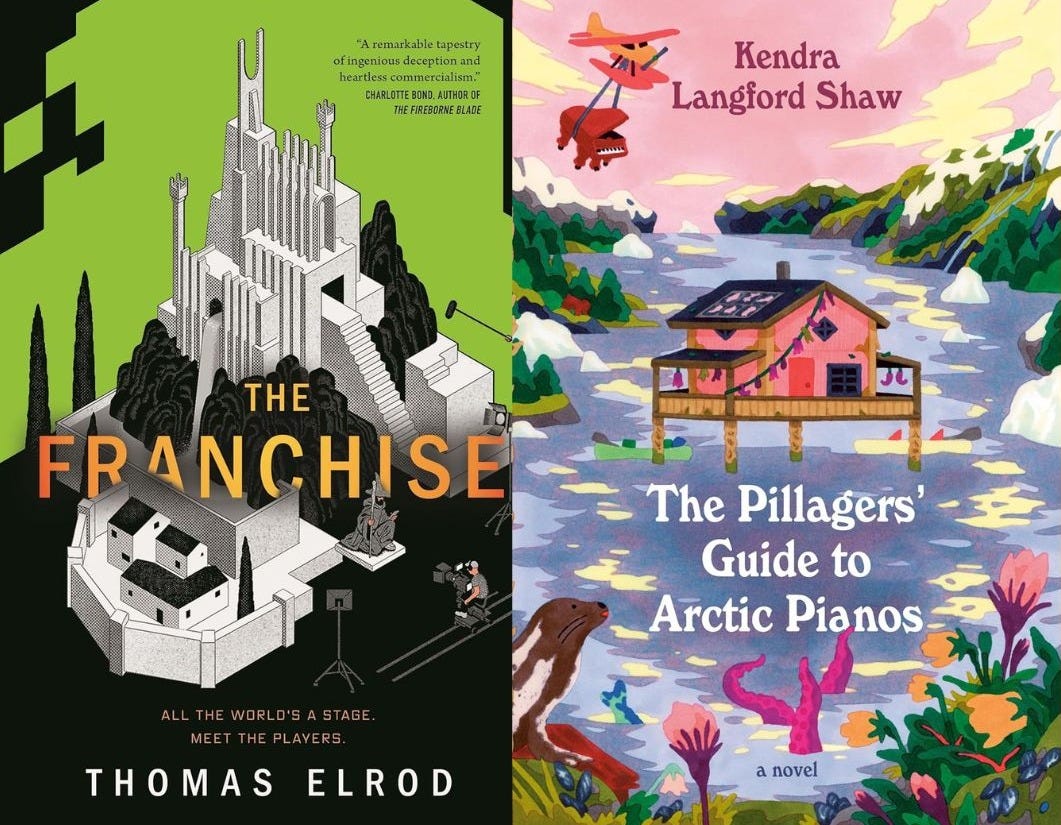
The Franchise by Thomas Elrod
Pitch: Game of Thrones meets The Truman Show in this epic tale of a Hollywood-owned fantasy world where nothing is quite as it seems to the people who live and die at the studio’s whim.
First line: Nobody remembers this but the weather had been so nice the day before.
Editor: Lee Harris, Agent: Ethan Ellenberg
BONUS: Author interview
Pillager’s Guide to Arctic Pianos by Kendra Langford Shaw
Pitch: Set in the far reaches of the Arctic, where descendants of early homesteaders discover an underwater treasure trove of heirloom instruments that have been perfectly preserved in the frigid waters for centuries, and where families are bound together by their resourceful means of adapting to warming oceans and rising sea levels.
First line: My little brother, Finley, drowned the first time wrestling the Napoleon pianoforte under the galactic starlight of an Arctic sunset; the way he later told the story, the piano had it coming.
BONUS: The author talks to People about her inspiration.
Editor: Naomi Gibbs, Agent: Janet Silver
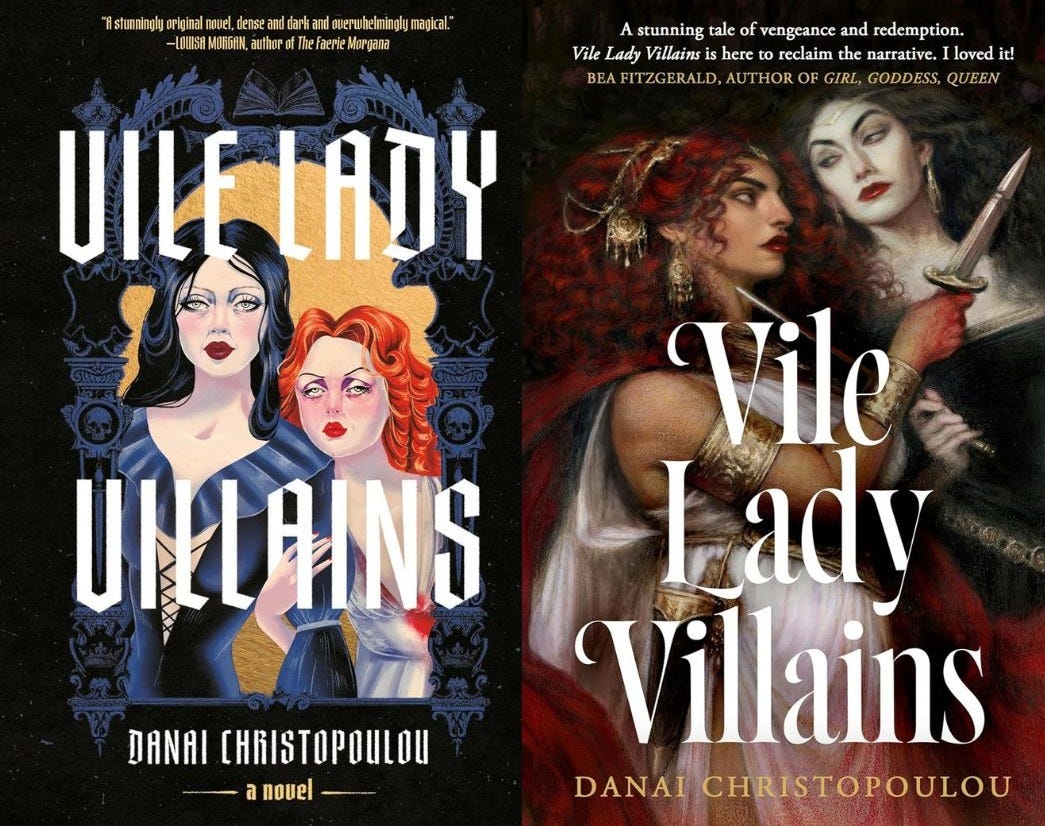
UK (right) vs US cover. Who wore it better?
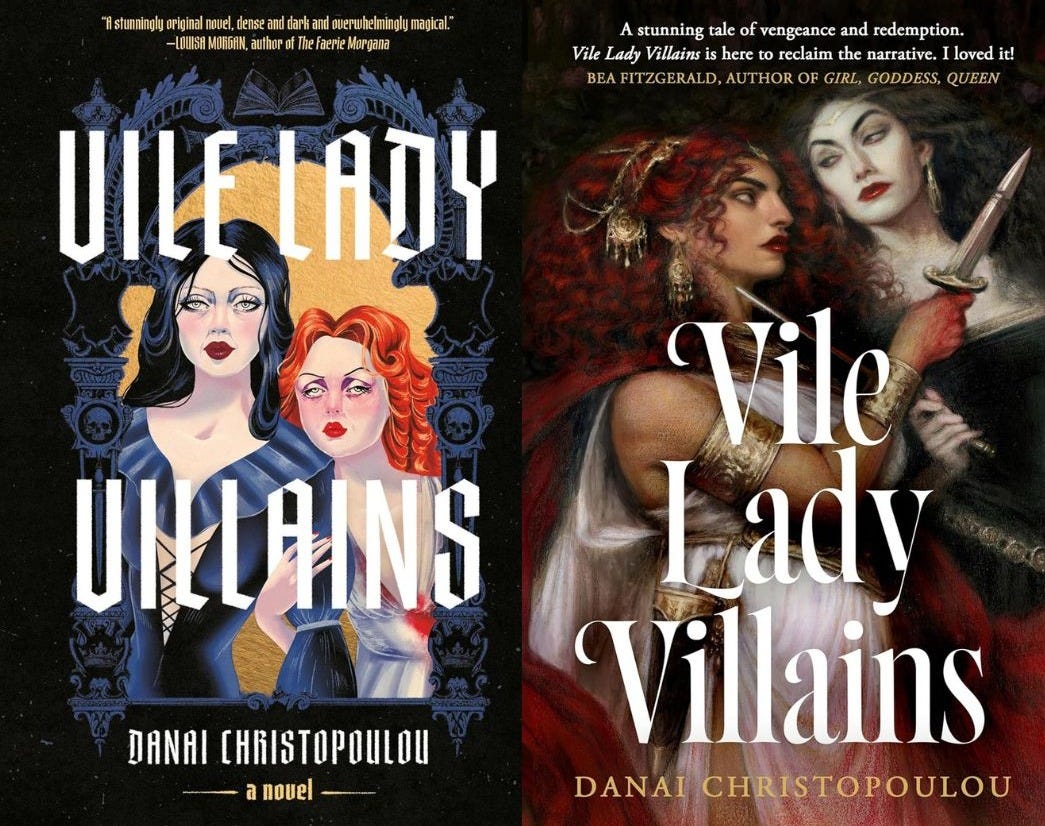
Vile Lady Villains by Danai Christopoulou
Pitch: In which Klytemnestra and Lady Macbeth must form an alliance if they wish to survive the realm of stories and the goddess determined to return them to their respective tragedies, to Mahalaleel M. Clinton
Bonus: The author talks about working as a literary assistant and how her novel originated with a tweet.
Editor: Mahalaleel M. Clinton, Agent: Lauren Bieker
BESTSELLING HARD COVER (Data from Publishers Weekly and BookScan)
So much competition on this week’s bestselling lists. Here are the newcomers:
Fury Bound, a romantasy by Sable Sorenson sold almost 56,000. Sable Sorenson is a pen name for Eliza Phillips and Annie Paige-Stone, and here they discuss their collaboration.
26 Beauties by James Patterson almost 35,000
The Calamity Club by Kathyrn Stockett sold almost 28,000
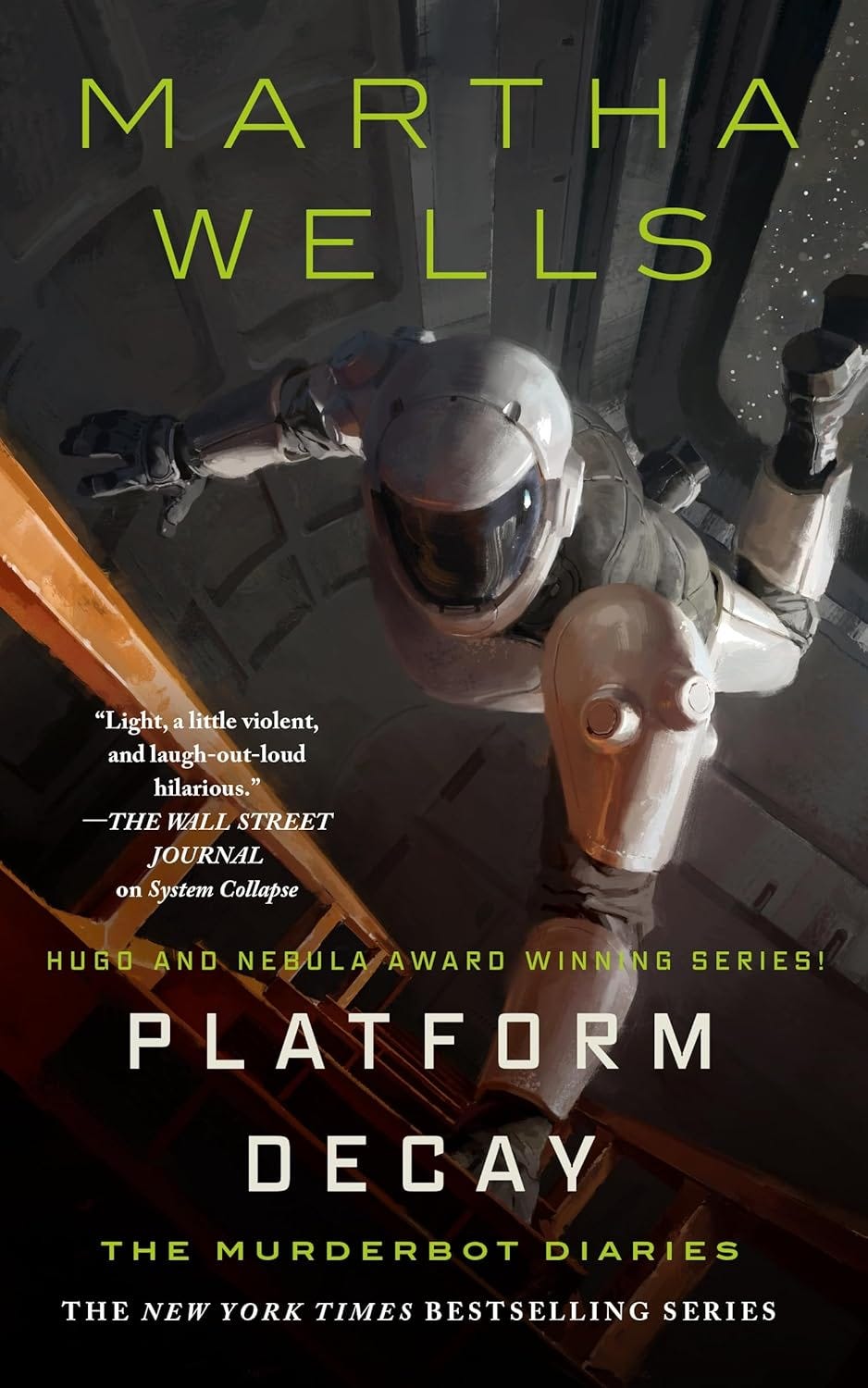
Platform Decay, a sci-fi mystery by Martha Wells sold a little over 19,000. Her books were adapted for Apple TV series Murderbot.
The Things We Never Say by Elizabeth Strout sold almost 17,000. She discusses the protagonist of her new novel.
John of John, an Oprah pick, by Douglas Stuart sold almost 10,000. Vulture discusses Stuart’s contribution to the gay literary canon.
Summer State of Mind by Kristy Harvey Woodson sold a little more than 6,000
Caller Unknown, a domestic suspense Reese pick by Gillian McAllister, sold almost 7,00. Fifty writing tips from the author.
Verity Guild, a romantasy by Mai Corland, sold almost 6,000
Carley Fortune’s latest, Our Perfect Storm, which seized the number one spot on the NY Times list, was oddly absent from the PW list and BookScan. I’m sure that will be rectified next week.
Trade Paperback Newcomers
Daisy Chain Flower Shop by Laurie Gilmore almost 49,000 (PB)
Rules for the Summer Meghan Quinn almost 31,000. The author discusses her switch from indie to trad author with Business Insider.
The Next War, a military thriller by Steve Yohn and Amir Tsarfati sold a little over 20,000 copies
Also on the list: Saltwater by Katy Hays, Outlaw by Jim Butchers and Rule of Three by Sara Cate a polyamory romance
NEWS YOU CAN USE
Publishing
The release of The Devil Wears Prada 2 inspired this piece on the decline of chick lit.
Craft
Finding the heart of your story from a screenwriter turned novelist.
Fulfilling a reader’s deepest wishes is one of the keys to addictive fiction.
Author Life
Mindset is vital to author success. Here’s some advice on how to shift your perspective.
Experiencing book deal envy? Dealing with jealousy in the author world.
How to form creative friendships.
Marketing
A deep dive on why you need blurbs, who to ask, how to ask, and how to nudge.
The ins and outs of online pitch events.
You need 50 Amazon reviews to get noticed by the algorithm and other marketing myths
For Indie Authors
How to cope with oversaturation in the self-publishing space.
A guide to contests for indie authors and whether they’re worth entering or not.
Literary Agents
Agents sometimes send out newsletters to editors about what they are trying to sell. Here’s an example.
How one author got her agent through her online agent guide.
Pine State Publicity is adding an agent arm headed by Zoe-Aline Howard. and here’s her wishlist.
Ms. Gillespie, thanks for the value you bring to the table. After 4 years of learning enough about fiction writing to get started, another year to complete the first novel, revision, querying and being introduced to indie-publishing, along with Substack school, I am finally coming out of the woods. At 70, there is something liberating, knowing the endgame is dust to dust, ashes to ashes. It's so important to have reasons for doing the things you do, based in reality, on your own reasonable timeline, still with earnest and industrious sincerity and intent. I have 6 more novels to go, God willing, and as a chronic creator, this "authorship" has been a wonderful journey. Thanks for your voice—you are appreciated!
This article found me at the exact right moment. I am a 71 year old first time author self publishing a psychological memoir July 1. The Allen Levi story hung me up in a good way. Grassroots. Word of mouth. A septuagenarian (big word, I had to google search it). I am building one genuine conversation at a time. Thank you for the roadmap.
Ben